Showing posts with label Books. Show all posts

It Seemed Like a Good Idea at the Time . . .

Saturday, August 20, 2016 0 comments

I am extremely pleased to be able to announce that my novella, “Building Baby Brother” is finally available.

I’ve been tempted to proclaim it as “10 Years in the Making!”, but then I’d have to answer for why it took me ten years to complete the final draft.

Suffice to say, for now, that it is finished and it is available for purchase directly from Paper Angel Press or from the major online booksellers.

If you’re at all curious about some of the ten-year history behind this story, here are some (old) blog posts related to it:

Otherwise, please buy and enjoy the story. And tell your friends!

Thank you.

WorldCon 2013 Report: Day Four — Hugo Awards Ceremony

Sunday, September 01, 2013 0 comments

hugosAfter four WorldCons, my first Hugo Awards Ceremony!

Some terrific social support from MoC Paul Cornell and winning artist John Picacio who both used their moments on-stage to speak out and support some of the madness, internally within fandom and externally in the political world, that has been happening.

Some of the award choices were disappointing—but then aren’t there always some?

In the end, though, the Hugo ceremony probably did more for my spirit than most of the sessions I attended this time.

WorldCon 2013 Report: Day Four — The Current State of US Copyright Law

copyrightPanel: Will Frank (M), Paul Herman, Richard Morgan, John Wardale

This was an interesting panel. I went because I knew that there's been quite a bit of uproar about various copyright-related issues. I did learn quite a bit.

My Notes

  • Some people think of copyright just as protection
  • The biggest goal of copyright is just to promote culture
  • The reason there is any protection at all is so that artists can gain income from their works
  • Supposed to provide a limit so you can protect your stuff for a period of time, but has become perpetual
  • Copyright is really narrow (someone has take the same picture you did)
  • Copyright is provided for in the Constitution; a balance—a deal—between the government and the artist
  • Patent is for ideas; copyrights are for the actual work
  • Copyright is the exclusive rights that can be licensed
  • Original copyright was 28 years, now 95; 75 years in most places overseas (life of the artist + 25 years)
  • In the U.S., it is only about economic benefit, not moral as in Europe
  • Fair Use exception: 4 key points
  • Have you harmed the future income potential of the work?
  • One key word is "transformative"
  • Some groups create an aura around their rights
  • Parody is a good example of fair use
  • The Internet exists in a weird place in relation to copyright
  • Cite your source
  • Respect the social norm
  • Trademark is a different beast; it's related to a product or a family of products, not content
  • Creative Commons licensing
  • Open source is about free speech, not free beer
  • Most fan work is derivative work
  • There are different rules about inheriting copyright than for other items; make sure you plan for that accordingly

WorldCon 2013 Report: Day Three — Writing Combat

Saturday, August 31, 2013 0 comments

combatPanel: Elizabeth Moon (M), Elizabeth Bear, Martha Wells, Jean Johnson, Lois McMaster Bujold

My Notes

This ship shoots ...

  • Two ways that combat can fall: being stodgy and divulging everything, or like a 70's psycho battle
  • Diane Duane and Joe Ambercrombie write good combat scenes
  • POV can solve everything
  • In a fight scene, it doesn't matter what everybody does
  • You need to know, but your character doesn't
  • Your POV dictates what you can and can't show
  • Show a little more by "backing up" a little
  • Does it further the plot?
  • Use the "fog of war"
  • Space combat is well done in Lois' books
  • Small-scale vs. military combat
  • You can "play act" the scene to see whether it works
  • In military, be aware of the chain of command and the responsibilities that each person will have
  • Someone in a fistfight is in the midst of chaos
  • In martial arts, you know what you did after you did it due to training
  • Use that moment when you get hit in the face
  • The medieval guy will probably win because he aims for the knees
  • When you're wearing a sword, you have a rudder
  • Learn all the mistakes you can make when carrying weapons so your characters can make them
  • Keep track of your ammunition
  • At some point your hero should run out if you want your story to be realistic
  • There's always ammunition and no one gets tired of carrying it
  • Another place to get information is historical museums
  • Chain mail is very fluid when it's all together
  • CJ Cherryh writes great space battles—they're submarine battles
  • They say start with the action, but then you need to put the reader in the character's head so readers have a reason to care about the character
  • Remember that space is three dimensional
  • Remember the side effects of injuries from battle during the rest of the story
  • Remember shock
  • Remember that muscles react to trauma and lock up
  • If you get an injury, think about it from a writer's experience
  • There is a mental impact to injury

WorldCon 2013 Report: Day Three — The Shift from Print Publishing to E-Publishing

small pressPanel: Kirsten Gong-Wong (M), Michelle Sagara, John Klima, Betsy Mitchell, Hugh Howey

My Notes

The Next 2-5 Years

  • Much lower startup costs today
  • Library usage of ebooks increases 50-70% *each month*
  • Print editions will never completely go away, likely for special editions
  • Print publishing is not sustainable for self-publishing
  • Readers will buy more books because they will be more affordable
  • Writers will be better off earning higher royalties
  • Publishers might finally get on board with offering an ebook with each print edition
  • Each print book is more expensive to produce than it used to be
  • Returns are factored into the price of the book
  • The value of an ebook needs to account for upfront costs, but readers don't see that for an ebook
  • 40% markup on books
  • Publishers are still scared that ebooks are cannablizing the sales of their print books
  • This is all fear pricing
  • Every industry makes the same mistakes
  • Once you have a low distribution cost, it fragments your audience
  • 1/2 of book sales are online; the marketing needs to follow it
  • Online distribution is allowing for a lot more experimentation in form and word count
  • I want something I can read during a lunch break
  • You can't give your print versions away for free without going bust, not true for digital versions
  • Digital editions can be corrected incredibly easily and quickly
  • Readers now expect the same quality from ebooks as in print
  • Overdrive is a way to get your self-published books into libraries
  • There are psychological differences between buying habits between ebooks and print books
  • There are a lot hurdles to get into traditional publishing
  • It's better to be lucky than good
  • He published 8 books before "Wool"
  • Your best strategy is to write your next book
  • Get 10 books out there
  • The only thing that made a difference was writing more books
  • The best way is word of mouth--the one kind of publicity you can't buy
  • We can usually tell by book 5 whether an author will be successful
  • Make the entry into a series the lowest barrier possible

WorldCon 2013 Report: Day Three — Publishing Intermediaries in the Digital Age

logo_72x72Panel: Steve Jackson (M), Tom Doherty, Irene Gallo, Joshua Bilmes, Betsy Mitchell

My Notes

  • Editors are needed to help the author make the book the best it can be
  • Agents are helpful in getting the right book to the right person
  • Provides a team of people already on the ground—curators
  • Personal relationships are important
  • Agents understand the contracts
  • Agents can how explain how the publishing and sales process works
  • Mass market is really hurting (repeat item from another session)
  • Only 3 key wholesalers now
  • Returns well over 70% last year for the largest distributor
  • In the digital space, a good cover is still needed
  • We talk about them being thumbnails now, but they always have been
  • 50% books are being sold online, so you want your marketing online too
  • Tor: 40% ebooks, but mostly backlist — about 18% on new titles
  • Partnership with NASA to make sure the science is right and will inspire kids
  • New term (for me, at least): "YA Okay"
  • NASA has a reach into tens of thousands of classrooms and will help to promoter their books
  • Self-publishing is not really a stepping stone to get into traditional publishing
  • A lot of bad books get good reviews—it's the sales that count
  • A hybrid model is best, particularly for new authors
  • Authors who request this, though, might be at a disadvantage

WorldCon 2013 Report: Day Three — But Why Can’t You See My Genius?

logo_72x72Panel: Beth Meacham (M), Michael Underwood, Eleanor Wood, Mary Robinette Kowal, Joshua Bilmes

My Notes

  • Everybody gets rejected
  • It's just a part of being in the business
  • Check the web sites to better understand what the publishers and editors are looking for
  • Sometimes you get a rejection just because it's not a good match
  • Sometimes it's because you need to write better
  • Rejectomancy
  • Trying to over analyze rejections is probably one of the worst mistakes writers make
  • The more you send out, the easier it should become
  • If you're an unpublished author and you receive a rejection, your state had not changed
  • In your query, don't say "I've already written four books in the series"
  • Fight the instinct to rewrite the novel after each rejection
  • Books sometimes get rejected just because of existing inventory in the publishing pipeline
  • Reading slush is good way to learn about how stories work
  • Every time you pick up something, you want it to be "the one"
  • Read your own book and note where you start skimming; these are the points that bore you
  • Also, note the points where you stop reading and why
  • Learn by writing other things in the meantime
  • Submit something and then start another book (not the sequel!)
  • Focus on upping your game and your accomplishments
  • #1: they don't finish
  • #2: they don't submit
  • #3: (sorry, didn't catch this one - someone came in late and distracted me)
  • People have an internal heckler *and* an internal editor
  • If you have a good editor, they make your work better
  • Every writer goes through the stage where they hate the work
  • The metaphorical red line of death (when the editor) stops reading entirely
  • Overexplaining, stopping the story, and too much detail
  • When the POV character looks in a mirror to describe themselves
  • The POV character being dazed, confused, and don't know where they are
  • A great writer can break all the rules, but they know which rules they're breaking
  • If I don't care about the character, I don't want to read it
  • Ender's Game is a good example
  • Maybe 1 in 1000 submissions will get more than the standard rejection letter

WorldCon 2013 Report: Day Two — How to Build a Successful Book Launch Campaign

Friday, August 30, 2013 0 comments

book launchPanel: Gabrielle de Cuir (M), Thomas Olde Heuvelt, Lou Antonelli, Gail Carriger, Gini Koch

One of the unintended amusements of this panel was that its located was moved on the online guide, but no change notice was put outside the room, so the audience was split until someone figured it out and all of us in the updated room traipsed back to the original room.

My Notes

  • Social media is very helpful
  • The Facebook page is where people went for updates between issues of the newspaper
  • Don't underestimate social media
  • For print media: don't pay for anything
  • You still have the bulk of the responsibility to help sell your book
  • One of the issues new writers have is segregation
  • Once you send a book out, start to think of it as a "product"; separate yourself from the work
  • Big Five publishers, even when they spend a lot of money on you, still expect you to do your part
  • Creating your own "brand"
  • Most of us are not very fast writers, and the publishing industry is notoriously slow
  • You want to keep yourself in people's minds in between books coming out
  • Build your brand with things pertinent to you and to your books
  • Which part of the "pie" are you after?
  • Nothing is more powerful than word of mouth
  • You're selling to an agent and editor, not a person
  • Second market is librarians
  • Book review bloggers
  • Everyone has a limited amount of time and we're in the entertainment industry
  • Need accolades page on your web site
  • If you're self-published, make certain you mention that your book was professionally edited
  • It's your career—control it
  • There is an element of luck—something that's very hard to tap
  • What other things are in your skill set?
  • What can you do to boost your luck?
  • Love your fans really, really hard
  • Reward your readers

WorldCon 2013 Report: Day Two — The Future of the Small Press

small pressPanel: Gary K. Wolfe (M), Michael Underwood, Darlene Marshall, Neil Clarke

I actually found this a really good session. There was far less "gloom and doom" than I expected.

My Notes

  • "My theory is that all presses are small presses now."
  • Many "small presses" seem to be imprints of larger publishers
  • Small presses tend to lack marketing support over big publishers
  • Small enough to be coherent and have a clear thrust to their efforts
  • Small presses are more willing to take a chance
  • Are more adaptable; they have to be
  • Can actually make money on an edition of 2000 copies--something large publishers can't do
  • Short story collections have pretty much disappeared from the large presses
  • A great way to break into the market with niche material
  • Your career as a writer is not placed on a gamble on your first/one book
  • Allows writers to develop
  • Are not viable if you need the large advances to make a writing as a writer
  • The future of the small press is flourishing is the second decade of the 21st century
  • Because of the ease of self-publishing, it can be hard to get rights to back lists for some authors
  • Not doing ebooks as a large part of your distribution is a huge mistake
  • Angry Robot provide a DRM-free ebook version when you buy a print copy
  • Lots of small presses don't survive for a lot of reasons
  • Too much success can kill a small press
  • Be careful and be bold
  • Idealism can be fatal for a small press (without a clear marketing plan)
  • What is your contingency plan?
  • Presses are more competing with movies and TV than with each other
  • Small presses are opportunities for novellas that are vanishing everywhere else
  • Most small presses lose a large percentage of their money to distributors
  • Subterranean and Arkham House have a strategy of doing a print run--and then not reprinting, creating an instant collectors market
  • We'll probably see a different kind of distribution with the changes in POD technology, particularly internationally (reduces shipping and tariff costs)
  • Presence of the printed book in a book store is still an advertisement
  • Within 10, 20 years, digital versions will be the preferred form
  • What will be the future of printed books outside of collector editions?
  • The returns model can kill a small press
  • The future of B&N could have a profound impact on the future distribution for the small press
  • Why do YA books seem to be selling more in print than digitally? (Probably because a lot of those sales are sales to adults)
  • Is it because the printed versions are so widely available?
  • What about the social element of sharing books?
  • Digital books with audio books built into it
  • The bar of entry to get into all forms of publishing is getting lower and lower
  • It's no accident that romance and erotica has exploded since the creation of readers
  • Reviewers can forget that they have digital books vs. printed books sitting on your desk
  • Nothing is yet out there electronically that displays and sells books better than a physical bookshelf
  • Again, rent is what kills small, niche bookstores
  • Finding a new author on Amazon is like finding a needle in a haystack
  • The problem with marketing is that if someone finds something that works, it no longer does because then everyone does it
  • The coherence of a small press creates a strong curation
  • Find your tribe and market to them
  • There are a lot of different business models
  • Self-promotion is huge toward success

WorldCon 2013 Report: Day Two — The Relationship Between Writers and Editors

editorPanel: Janet Harriett (M), Gardner Dozois, Sheila Williams, James Patrick Kelly, Lou Anders

This was a somewhat disappointing panel. Easily the first fifteen minutes were spent with most of the panelists comparing and congratulating each other on the number of Hugos they had each won over the year.

My Notes

  • Your editor picks you
  • Read their magazine or books to learn what kind of things they like before you submit your work
  • A writer who reliably delivers you great stores every couple months and is easy to work with
  • Read the guideline. Although they are called "guidelines", they are not suggestions
  • What's the best showcase for your story? Which publication or anthology?
  • Two types of readers: print subscribers generaly vote for print books; online readers don't vote for print stories
  • Think about the time factor between submission and publication
  • Your editor is there to make you look good
  • The editor is the cheerleader for your book in-house
  • The stories are written by people, and you have to work with the people. (This can be both good and bad.)
  • Most writers are fragile bundles of ego.

WorldCon 2013 Report: Day Two — How to Convert a Book into E-Book Format

ebooksPanel: Tod McCoy

I have very few notes on this session because, once I realized the secret, I just followed along with the steps and listened to the discussion.

Other Notes

  • Understanding HTML and CSS are key
  • Ebooks are basically a collection of HTML pages
  • Kindle is behind the curve on support for more complex formatting
  • teleread.com is a good source if you’re looking for information on the current state of eBooks
Labels: , ,

WorldCon 2013 Report: Day One — Best Practices from Booksellers

Thursday, August 29, 2013 0 comments

logo_72x72Panel: Michelle Sagara, Peggy Hailey, Michael J. Walsh, Gini Koch, Lawrence Person

This was an interesting session and not as "gloom and doom" as you might think.

Other Notes:

  • Bookselling is in a period of minor transition (personally, I thought this was a vast understatement)
  • Things haven't changed that much
  • It's important to hand-sell books customers would actually like
  • Booksellers pay, in general, less than everyone else; they work there because they love books
  • Struggle with the brick and mortar stores with eBooks
  • Suddenly everything was available everywhere all the time
  • A great time for book buyers
  • For sellers: a lot more competitive, a lot more books, free shipping
  • It's nearly impossible to compete with Amazon at the things they do well
  • The Internet changed a whole lot
  • Amazon is a godsend to small presses to sell internationally
  • It's a Golden Age for people buying books
  • For more authors, it's more difficult because there's so much out there
  • Buy the building
  • Your job is to convince your audience that you are worth supporting
  • The way to make a small fortune in the book business is to start with a large fortune
  • Know your customers; know what your strengths are and what your weaknesses are
  • Most bookstore have not failed due to sales, but from rents
  • You need to do something that Amazon can't
  • Author events
  • Offer yourself for events; pass the word
  • Keep your word
  • Bookstores need authors; authors need bookstores to sell their books
  • Word gets around
  • Most bookstores are willing to work with you, but make sure you're talking to the right person
  • Make sure you tell your friends to show up
  • As it becomes easier to get POD books, more bookstores will be willing to handle them
  • Many bookstores will sell on consignment
  • Tends to be book-dependent
  • As an online bookseller, I will tend to carry only stuff I already know
  • We shouldn't judge a book by its cover--but we do
  • Lead time for events depends on the store: at least a month for large stores
  • Ideally, approach them a few months before the book actually becomes available
  • The bookstore business is an absolutely insane business
  • If you want to get rich, don't be in this business

WorldCon 2013 Report: Day One — Self-Promotion: Everything You Know About it Is Probably Wrong

self-promotionPanel: Julie Barrett, Genese Davis, Gini Koch, Teresa Nielsen Hayden, Joshua Bilmes

Some good nuggets in this sessions, but the discussion around book trailers made me roll my eyes. Blizzard Entertainment has deep enough pockets to produce Hollywood-level trailers; most of the rest of us do not.

(Also, contrary to the statement in the session title, it wasn’t. But maybe then I have more of a clue than most other writers.)

Other Notes:

  • The Internet has made it so much easier, but once it's out there, it's out there.
  • Social media: social first, media second, self-promotion last. Use it to build relationships.
  • People are interested in why, not just what.
  • Real interest is more important than just promotion
  • Postcards have a high perceived value and be used in a multitude of ways
  • A press release is useless without a copy of the book in hand
  • The cover is one of the key items in promotion
  • The cover is a very small poster advertising your book
  • The only job of your title and cover are to get someone picks up the book to turn it around. The back cover is to get the reader to open the book. Cover is the biggest reason to buy the book.
  • Trailers. Yea or nay?
  • The most important self-promotion you can do is the one you enjoy
  • Social media is hard work—to do right

WorldCon 2013 Report: Day One — What Makes a Review Great?

reviewPanel: Alvaro Zinos-Amaro, Mari Kotani, D. Douglas Fratz, Moshe Feder, Liza Groen Trombi

This was a somewhat disappointing panel, chiefly because I expected more of a "here are the elements of a good book review" and it turned into more of a discussion of reviewing styles and how/why reviews are done.

Other Notes

  • Use reviewers to guide us to authors and new and interesting work
  • For new authors, or someone reviving their careers, it's a way to see what's going on
  • There's too much out there
  • Reviewing is a service industry
  • Write a review enjoyable to read for its own sake
  • Reviewing can be an art form in itself
  • Something that makes me want to read something I otherwise wouldn't have
  • Context in the field is important
  • Reviewers should have a point of view
  • No publicity is good publicity for some books

WorldCon 2013 Report: Day One — How To Obtain an Agent

agentPanel: John Berlyne (agent), Joshua Bilmes (agent), Jaime Moyer (writer)

It was interesting to hear Jaime's story of sending out more than 120 queries over 2-1/2 years for her two books before she found an agent willing to represent her. She spent much of that time reworking her queries, believing that the right query is key. Finally, she ignored samples and wrote a query from the heart. That is the one that got her her agent.

Other Notes

  • Check out agentquery.com
  • Research what the agents want
  • Going to conventions
  • Check Acknowledgments in the books you like
  • Where possible, personalize the query
  • Don't CC all agents at once
  • You spent all that time writing that book, don't spend 5 minutes trying to sell it
  • Fascinating that there are so many stories of major authors breaking the rules to get in
  • A query letter has to talk about your book and it needs to talk about you
  • I'm not going to make money on your first book
  • Right desk, right story, right day
  • Sell one thing at a time
  • Address the agent by name in your query letter
  • Don't commit to a single agent (exclusive) without a really good reason
  • We want to work with authors who want to work with a big publisher and make lots of money (in reference to accepting self-published books)
  • Publishers don't pay a lot of attention to winners from writing conferences; they have a different mindset than authors who want a check from...
  • "Most of my friends who have self-published have failed miserably"
  • If you've self-published, what do you need me for?
  • Short story vs. novelist background: 50%
  • The assumption of doing an apprenticeship that way is not important
  • Consider the author as brand
  • It's difficult to establish a new author in multiple markets from the beginnings
  • Include relevant publishing or professional credits
  • If the author has a footprint on the Internet, I'll get a sense of whether the person is suitable for me. Comes down to a matter of good taste
  • View it as a long-term business partnership
  • Find an agent who is willing to grow your career
  • Look carefully at the language of any agreement your agent asks you to sign, particularly what happens when you leave the agent
  • Have a new book out every year

WorldCon 2013 Report: Day One — Arrival

Thursday brings a bright and sunny day to San Antonio. I've already checked in at Registration and have full days of sessions planned every day of WorldCon.

This is my fourth WorldCon, and I've never before seen actual sessions scheduled as late as 9:00PM before. That's going to make for some long days and late nights. (Thank goodness that sessions don't really start until 10:00AM.)

Anyway, as during past WorldCons I've attended, I'll be blogging my notes and impressions of the sessions here as I go along.

I hope you' come along for the ride . . . 

Going on the Hunt

Friday, July 19, 2013 0 comments

Hunt_Press_Logo_72x72I wanted to give a shout-out to everyone that Hunt Press has launched a new web site today.

Please check it out. While you’re there, buy a book—or three—from them.

Supporting small presses is what it’s all about. If you’re looking for interesting, leading-edge reading, places like Hunt Press are where you want to look.

Go. Buy. Let me know what you thought.

Labels: , ,

The Man Who Wanted to Live Forever

Wednesday, June 06, 2012 0 comments

Ray-Bradbury-Author-of-Fahrenheit-451It is another day of great sadness. We have lost another of our great masters of speculative fiction: Ray Bradbury.
His influence and impact was arguably profound. Many of his works are recognized as classics in the field across generations of readers.

Many years ago, I had the pleasure of attending with a good friend a talk given by Ray Bradbury hosted at UC San Diego. He ended the session, as I’ve been told he always does, by pointing out over the audience and telling us, “Live forever!”.

Through his works, he will.

Labels:

Serial Numbers, or Subscribing to a Theory

Saturday, October 15, 2011 1 comments

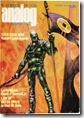
This is the very first issue of Analog I ever read. I still have it.I’ve been pondering on the subject of eBooks and digital distribution of books—well, any content—and began to wonder if there is an opportunity for writers and publishers to adopt a different model or, actually, give new life to an old one.

It has been a long-standing practice in monthly magazines to serialize chapters from an upcoming novel. One advantage of this is that readers can get their monthly fix without waiting for the entire novel to be published.

One of the unfortunate side effects of the Internet age, with information available instantly at ones fingertips, is the reduction in the amount of time that many people are willing to wait to get what they want: the phenomenon half-jokingly referred to as “short attention-span theater”.

What is wonder is this: Would readers would be willing to “subscribe” to a book if its chapters were published on monthly basis, rather than waiting until the book was completed?

Magazines sell monthly subscriptions. Some software is available on a subscription basis, allowing users to get free upgrades for a specified period of time. Could this same model be applied to other content?

Following a model similar to online gaming, readers could be offered “tiers” of subscription levels: preview content for free, complete content for a basic subscription, additional content for an additional charge, and perhaps access to all of an author’s work (or all editions of a work) for a “lifetime subscription”.

I can see all sorts of details that would need to be worked out, particularly around pricing:

  • Would a subscription cost more or less than the final book? (I can see readers willing to pay a little more not to have to wait.)
  • Might a subscription price also include a reduced price (or free) edition of the final book?

I can see some advantages:

  • For readers: As previously mentioned, readers would not need to wait months (or years!) to follow the adventures of their favorite characters. In addition, they would receive only the content that they want. (I don’t know about you, but I’ve purchased magazines just for the chance to read a single article or story. While I’m sure that the publishers loved that, it did irk me.)
  • For writers: It could provide a steady stream of revenue for writers and publishers, knowing that they have a committed audience for the length of their subscription to the work. It would also make it much easier for them to keep in contact with their audience, giving them a direct connection to provide their readers with information about upcoming work and appearances.

What do you think? Would you be willing to subscribe to a book?

Labels: , ,

The Future of Books

Wednesday, September 14, 2011 0 comments

kirk_twok_with_bookI’ve been pondering the future of books.

Well, printed books, that is.

As much as some visions of the future might have us believe otherwise, I am no longer convinced that printed books are going to survive as a mass-market commodity. For those of you who know me, you’ll probably realize that this is a significant—perhaps even shocking—change in my opinion.

Even with all the changes in publishing and media distribution, I have trouble believing that books as an art form will go away. Long forms of fiction will continue. If anything, it should reopen the market for other short lengths of fiction (such as novellas and novelettes) that might otherwise have had trouble getting published or distributed.

There’s no denying the allure and impact of the eBook r/evolution. As much as I totally enjoy holding a printed book in my hands, I can completely understand the ease and simplicity of having them in digital form. Carrying around an entire book series on your Kindle or tablet is a lot easier than transporting them in your luggage.

There are going to be some people who will still want to feel paper beneath their fingers, and bindings beneath their palms, but I think they can be more than adequately served through print-on-demand services.

I was pondering this during the session at WorldCon, “Publishing in the Age of e-Books”. Someone asked the question about what would happen to getting authors to sign your books. One of the panelists responded by saying that he has them sign his Kindle and, when the back of it is full, he’ll get a new one. An interesting solution, but, I think, an ultimately unsatisfying one.

I’m not sure there’s quite the same satisfaction for book collectors of getting an author’s signature on a one-of-a-kind copy of a book that they got printed out at their local POD vendor. They’d have the autograph, sure, but the book itself might have no other unique value beyond that, as anyone else could print out a copy just like it.

Perhaps the next evolution in book collecting will come in the form of very limited print runs with the specific intent of being distributed with the author’s signature. It might also have a special layout or design that would not be available to the print-on-demand audience. I can see value in this.

I honestly don’t know. I can foresee current books becoming collectible antiques once they no longer become commonplace. And I dearly hope that the love of reading does not diminish as time passes.

What will the future bring?

I guess we’ll just have to turn the page of time and see . . .