Showing posts with label Computers. Show all posts

WorldCon 2013 Report: Day Three — Wiring the Brain

Saturday, August 31, 2013 0 comments

wired brainRamez Naam

This session was absolutely fascinating. The speaker was both entertaining and informative. Enough so that I made a point of purchasing his books later.

My Notes

  • Most of the research today is for medical purposes
  • One the earliest implementations was the cochlear implant
  • It could eventually lead to telepathic cyborgs, but right now its usages are much more prosaic
  • It's not fantasy to pump information into the human brain; it's technology
  • Training time is down to less than an hour for some patients to control remote limbs with their brains
  • Scientists have developed a chip to replace a damaged hippocampus (formation of long-term memories)
  • Test rats ended up with "super memories"
  • Prefrontal cortex implants (intelligence) more than correct functions (leading to the planet of the cyborg super apes?)
  • Mostly today, our electronics are used to communicate
  • Can we use this technology to transfer information between two different brains?
  • Primary source of research might be medical; second is military
  • Bridge data between two chips to see if the second rat can use the data from the first rat
  • Neural dust
  • Remote rats share information when implants are activated
  • Remote professors share data
  • Lower visual fidelity than normal
  • This is your brain we're talking about
  • Computers are perfect, right?
  • Hacking and spam in your brain
  • Hacking of medical devices is here now
  • Check out his books Nexus and, soon, Crux
Wednesday, January 18, 2012 0 comments

StopSOPA_NewLogo_SOPA_PIPA

Say Hello to My (New) Little Friend . . .

Saturday, August 27, 2011 0 comments

Yes, I’ve entered the tablet computing revolution (evolution?).

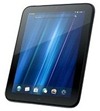
HP_TouchPadThe day when the HP TouchPad first went on sale (at a decent discount for employees), I spent my lunch hour lined up at the WebOS Retail Store in Sunnyvale (as they were offering an additional discount on accessories and you could bring your shiny new HP TouchPad home today).
Now, I adore my HP netbook. It’s an ideal traveling companion when not on business—and perfect during NaNoWriMo, as I can easily carry it everywhere I go so that I can squeeze in a few extra minutes of writing while waiting for doctor’s appointments, oil changes, and so on.

However . . .

After spending only a few hours with my new TouchPad, I knew that my netbook was now obsolete. The TouchPad was lighter, more flexible, and had a much longer battery life. While I initially bemoaned the fact that it did not support native Microsoft Office file editing, I recognized that very little of my writing required any of the tools that Word provides. Importing from plain text format into Word required very little effort in exchange for the flexibility that the TouchPad now offered. (I also purchased the separate Bluetooth keyboard, so my TouchPad has all of the keyboard functionality that my netbook does.)

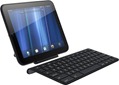
ae-300-hp-touchpad-keyboard-300wThe “instant on” capability of the TouchPad, and immediate access to most of my instant messaging and e-mail accounts, made it ideal for my trip to WorldCon 2011. Having the convention program on the TouchPad was totally awesome. During lunch and other breaks, I would bring out my keyboard to make blog posts and complete my notes, as well as answer the occasional e-mail or three. (Not always easy, as the WiFi connectivity there was spotty at best outside the main area.) I even watched the streaming broadcast of the Hugo awards on it from my hotel room.

Would I recommend the HP TouchPad? Definitely. At it’s original retail price, that might have been debatable, but at the current $149 price (I have the 32GB model), there is no doubt. It does almost everything I need in a much more portable package than my netbook (something I never would have thought). I’m looking forward to seeing how it behaves during this year’s NaNoWriMo.

WorldCon 2011 Report: Day Four – Can Computers Think?

Saturday, August 20, 2011 0 comments
Can Computers ThinkThere was much discussion about Watson and what it (he?) represented in terms of advancement in terms of computer-based artificial intelligence. (I don't think anyone considers Watson a true AI.)

The concept of what most people consider a true AI is based on HAL from "2001: A Space Odyssey". We aren't there yet.

What we keep discovering is that when we program systems, they don't respond like humans. The example was given of the Google car that does not see or drive that a human being does.

If a computer evolved to the point where it could rule us, would it want to?

If a computer was developed that could develop improved programs for itself (or other computers), it might evolve so quickly that we might not realize or recognize it until too late.

Advances in hardware (processing power) has been the chief--not sole driver--in recent advances in computer "artificial intelligence", but the questions (and limitations) seem to have remained fundamentally unchanged in nearly 40 years.

WorldCon 2011 Report: Day Three – Social Media for Writers

Friday, August 19, 2011 0 comments
Social Media for WritersI got the impression that nearly everyone on the panel felt that social media interaction was a necessary evil, yet also a valuable means to interact and hear from ones audience. Beware, however, of it becoming a distraction from the real work of writing.

Twitter seems to be the preferred method of communication, with feeds to other avenues such as Facebook.

They use Facebook as a "hub" to collect their content from other avenues (Twitter, blogs, etc.) and find that most of their feedback comes through Facebook and not through the original source.

Privacy was a concern regarding some of the social networking platforms, particularly Facebook and Google+. In general, Facebook and Google+ both got pretty negative feedback from the panel.

There was a general consensus to use social media to recommend, not to sell.

Cory Doctorow's advice was to use the ones that you find satisfying.

WorldCon 2011 Report: Day Two – The Ethics of AI

Thursday, August 18, 2011 0 comments

The Ethics of AIArtificial intelligence likely to be different from human or other biological intelligence we know. Will we recognize it when we see it? Will we recognize it soon enough?

The majority of the arguments focused on "sentience" and "self-awareness". How do we measure sentience, particularly in a non-biological system? The Turing Test? Is that enough? Or is it possibly biased to recognize human-like intelligences?

How do we measure self-awareness? Is the "mirror test" truly reflective (sorry!) of self-awareness or just demonstrative of understanding of how a mirror works?

For machine-based systems, the "person" is in the data. This leads to all sorts of good questions and parallels in terms of the function of operating systems, physical structures, and their similarities and differences in both types of life.

Humans have differing physical structures, but similar core elements: skeletons, circulatory systems, etc. and an autonomic systems to drive them (an operating system?). Computers have motherboards, processors and operating systems to drive them.

Humans have memories; computers have data. The argument was made human personalities are based on their knowledge and memories (data + subjective analysis). Can computers be subjective?

Can compassion be programmed into a computer? At what point does it become more than data and programming? How do we quantify human compassion?

An interesting point was made that we legally grant rights to humans at the age of 18 (this assumes a certain level of maturity--that got a laugh). How would we measure the "maturity level" of an AI? Children and developmentally disabled individuals are not granted certain rights in order to protect them. Their caregivers are assigned responsibility. How might this apply to an AI?

What happens should an AI misbehave or contradict--in other words, behave like a child? What happens if an AI commits a crime--intentionally or unintentionally? What would be an appropriate punishment?

A very interesting statement was made during this panel: The Three Laws of Robotics (from Isaac Asimov) are a form of slavery. Think about it.

(Note: Some of the questions and extrapolations included are mine as they occurred to me during the session.)

Writing as Work (not as Work Therapy, just Work): Part One

Sunday, September 05, 2010 1 comments

In recent conversations with other writers, I hear concerns that, as they’re working on a new piece for the first time, what they’re writing isn’t good enough, they aren’t sure they have the characterizations right—various worries like that. My stock answer is usually, “That’s what second drafts are for.”

About the same time, I overheard other some conversations between students about how much effort writing is, that two pages—or four or six or eight or ten or however many—is a lot to have to write. (Personally, I think I would barely break a sweat having to write a two-page paper, other than from the effort of keeping it down to two pages in length, but that’s a whole other topic.)

Both of these together got me thinking about how far we’ve come—for good or bad—over the years in terms of the tools we have to get words onto paper. Back in the days before affordable word processors (staying within the timeframe of the last century or so), writers worked on typewriters—lucky or wealthy ones used electric ones, but that really only provided the chief advantages of speed and reduced effort to press key to paper. Correcting errors—and writing those off-handedly referenced second drafts—required actually retyping of the actual pages. Editing, insertion, and deletions of large chunks of text was something writers saved until the last moment, because it could mean typing many, many pages to bring the page numbering back into alignment. Writing was work.

I can remember typing up passages and then realizing that I wanted to add something in between and typing a separate page numbered XXa and inserting it into the stack so it would be there when I retyped the entire thing for the final draft. I can also remember reading over pages of my purported “final draft”, only to discover misspelled or missing words. Many teachers wanted clean, pristine pages and would not accept papers with handwritten corrections or smears of correction fluid. So, once more, a fresh sheet was inserted to be retyped—often so new errors could be created.

The amount of effort required to write an effort was significant. It was more than just the willingness (or insanity?) to sit before a typewriter and compose pages for hours on end, but also backspace, erase, pencil in, overtype, pause in the middle of thoughts to insert a new sheet a paper, and add new ribbons of ink (which would usually occur late on a Sunday when you discovered you had used your last one and nearly all of the stores that might the one for your typewriter was probably closed). It also meant accepting that those same pages might be retyped several times before being considered “final” and published. Sending it out for possible publication also meant that it might have to be re-typed again, but I think at that point there was sufficient financial incentive to embrace the task.

We’ve come a long way since then. And, almost unequivocally, I’m grateful.

Labels: ,

Say Hello to My Little Friend . . .

Tuesday, August 25, 2009 0 comments
Okay, I admit it, sometimes I get it completely wrong.

When netbooks (those small, ultra-light portable computers) first arrived on the scene, I thought they were an interesting little niche product. Sure, they were compact, lightweight, and even occasionally stylish. There were also, in my opinion, woefully underpowered. Why would someone in their right mind spend that kind of money when, for a little more money, they could get a full-featured notebook computer?

Several months ago, I tried one out of curiosity. I spent probably a grand total of less than 30 minutes with it before concluding that, although it seemed fast enough, the screen was too small, the smaller-than-usual keyboard made typing on it maddeningly annoying. That, for me, seemed to be the end of it.

I completely missed the point. It wasn't about power; it was about portability. For many people, the main uses of their computer are for checking e-mail and browsing the web. Neither of these activities require a lot of computing firepower. Provide these in a computer that is not only relatively inexpensive, but also portable and, apparently, you have a winner.

Through a somewhat complex series of events, I ended up owning one of these netbook computers. Although I don't use it as primary system, I also can't imagine not having it. Its portability makes it ideal for when I need a computer along to check e-mail and perform various activities on the web. It is perfect for when I want to wonder around the house, but be available via e-mail or instant messages.

I've also discovered that it is capable of running Microsoft Office 2003 capably. (It's no speed demon in that regard, but it more than adequately handles basic word processing without me having to worry about formatting hiccups transferring files between Works and Word.)

While I'm not ready to give up my desktop system, as the price-to-performance ratio is still better there, I can now see why netbooks are all the rage. I'm even ready to believe that these systems are poised to fundamentally change the consumer personal computer market for the reasons given above.

So, yes, contrary to popular belief, I am capable of admitting when I'm wrong.