Showing posts with label Technology. Show all posts

WorldCon 2013 Report: Day Three — Planning a Starship

Saturday, August 31, 2013 0 comments

starshipPanel: Laura Burns (M), David Brin, Gregory Benford, Joe Haldeman, Albert Jackson

An interesting panel that raised some good points, particularly if you want to write a story based on current knowledge and technology

My Notes

  • Non-excluded magic — something that happens we didn't foresee
  • A lot of science fiction is moving back into the solar system, so why don't we?
  • Starting points:
  • Experiments that are being done now by putting people in a tin can and seeing what they need to survive and how they adapt
  • What do you need to end up with when you reach your destination
  • The first starships will probably carry an AI
  • We can get within a few % of light with technologies we know--we just have to build them big
  • One other SLT (slower-than-light) technology is fusion
  • Generation ships where stations become so self-sustaining that they just leave
  • Comets, but you need a different species of human to live there
  • Suspended animation: enabling technology is developing
  • AI: goes to the asteroids, makes copies of itself and moves outward; it could fill the galaxy with copies of itself—within three million years (an eyeblink in astronomical time)
  • How difficult it is to create a micro kilogram starship that can flash by a sun and collect data, wave a flag—very expensive, but a fraction of the cost of a full-blown human mission
  • Exploring our own solar system should put us in better shape for interstellar flight
  • The past two centuries really didn't start until their 14th year—that's next year
  • What are we looking for?
  • G-type stars with Earth-like planets
  • What about the weird exceptions?
  • The second-closet star to us (a brown dwarf) was discovered just last year
  • Habitable worlds around brown dwarfs might be the largest population of habitable planets in our area
  • Energy beamed from your home solar system
  • Microwaves would be more effective than lasers
  • If you can sustain acceleration, then a living person can see the stars
  • 1g acceleration and you can reach Andromeda in 26 years, but the sweetheart you kissed goodbye—and it was good-bye
  • Fusion is just another rocket—and you still have to carry the fuel
  • Beings that live on the "roof" of the world
  • The reason to think about starships now is to look at what steps we need to take in the next century
  • You have to wonder, "Where the heck is everybody?"
  • The closest it is we get to the stars, the weirder it is

WorldCon 2013 Report: Day Three — Wiring the Brain

wired brainRamez Naam

This session was absolutely fascinating. The speaker was both entertaining and informative. Enough so that I made a point of purchasing his books later.

My Notes

  • Most of the research today is for medical purposes
  • One the earliest implementations was the cochlear implant
  • It could eventually lead to telepathic cyborgs, but right now its usages are much more prosaic
  • It's not fantasy to pump information into the human brain; it's technology
  • Training time is down to less than an hour for some patients to control remote limbs with their brains
  • Scientists have developed a chip to replace a damaged hippocampus (formation of long-term memories)
  • Test rats ended up with "super memories"
  • Prefrontal cortex implants (intelligence) more than correct functions (leading to the planet of the cyborg super apes?)
  • Mostly today, our electronics are used to communicate
  • Can we use this technology to transfer information between two different brains?
  • Primary source of research might be medical; second is military
  • Bridge data between two chips to see if the second rat can use the data from the first rat
  • Neural dust
  • Remote rats share information when implants are activated
  • Remote professors share data
  • Lower visual fidelity than normal
  • This is your brain we're talking about
  • Computers are perfect, right?
  • Hacking and spam in your brain
  • Hacking of medical devices is here now
  • Check out his books Nexus and, soon, Crux

WorldCon 2013 Report: Day Two — Where there’s a Will there’s a Way: Reproductive Technology, Medical Ethics and the Law

Friday, August 30, 2013 0 comments

reproductivePanel: Tore Hoie (M), Lois McMaster Bujold, W. A. (Bill) Thomasson, Sam Scheiner

How can you arrange for your un-conceived child to inherit your possessions? What are the medical, ethical and legal implications of modern reproductive practices such as surrogate parenting, IVF after the male spouse is dead, and the use of sperm banks?

My Notes

  • We already have the ability to screen embryos for genetic diseases. Soon, we'll be able screen for specific traits.
  • What are the rights of surrogate mothers and the rights of adopted children?
  • That's why we have lawyers
  • We have egg donors now, not just sperm donors
  • Technological advances bring decisions that didn't exist before
  • We've had the capability to screen for certain genetic diseases for a while now, so there's been a shift in attitude toward the families who allow disabled children to be born
  • On panelist offered this idea: It is not a baby until the woman carrying it decides whether or not to allow it to be born
  • Is it a similar set of decisions for end of life?
  • It's about making decisions for people who cannot
  • A gene sequence has no ethical or moral rights
  • Whether a specific genetic defect is dangerous can be context specific
  • What sort of society are we? Want to be?
  • What happens when the 1% get to have "better" children than everyone else? (They get to be the Guinea pigs for a change.)
  • What happens when insurance companies are making the choice?
  • It won't ever get simpler.
  • When did we all decide that we can have everything we want?
Wednesday, January 18, 2012 0 comments

StopSOPA_NewLogo_SOPA_PIPA

The Future of Books

Wednesday, September 14, 2011 0 comments

kirk_twok_with_bookI’ve been pondering the future of books.
Well, printed books, that is.

As much as some visions of the future might have us believe otherwise, I am no longer convinced that printed books are going to survive as a mass-market commodity. For those of you who know me, you’ll probably realize that this is a significant—perhaps even shocking—change in my opinion.

Even with all the changes in publishing and media distribution, I have trouble believing that books as an art form will go away. Long forms of fiction will continue. If anything, it should reopen the market for other short lengths of fiction (such as novellas and novelettes) that might otherwise have had trouble getting published or distributed.

There’s no denying the allure and impact of the eBook r/evolution. As much as I totally enjoy holding a printed book in my hands, I can completely understand the ease and simplicity of having them in digital form. Carrying around an entire book series on your Kindle or tablet is a lot easier than transporting them in your luggage.

There are going to be some people who will still want to feel paper beneath their fingers, and bindings beneath their palms, but I think they can be more than adequately served through print-on-demand services.

I was pondering this during the session at WorldCon, “Publishing in the Age of e-Books”. Someone asked the question about what would happen to getting authors to sign your books. One of the panelists responded by saying that he has them sign his Kindle and, when the back of it is full, he’ll get a new one. An interesting solution, but, I think, an ultimately unsatisfying one.

I’m not sure there’s quite the same satisfaction for book collectors of getting an author’s signature on a one-of-a-kind copy of a book that they got printed out at their local POD vendor. They’d have the autograph, sure, but the book itself might have no other unique value beyond that, as anyone else could print out a copy just like it.

Perhaps the next evolution in book collecting will come in the form of very limited print runs with the specific intent of being distributed with the author’s signature. It might also have a special layout or design that would not be available to the print-on-demand audience. I can see value in this.

I honestly don’t know. I can foresee current books becoming collectible antiques once they no longer become commonplace. And I dearly hope that the love of reading does not diminish as time passes.

What will the future bring?

I guess we’ll just have to turn the page of time and see . . .

Say Hello to My (New) Little Friend . . .

Saturday, August 27, 2011 0 comments

Yes, I’ve entered the tablet computing revolution (evolution?).

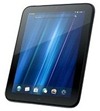
HP_TouchPadThe day when the HP TouchPad first went on sale (at a decent discount for employees), I spent my lunch hour lined up at the WebOS Retail Store in Sunnyvale (as they were offering an additional discount on accessories and you could bring your shiny new HP TouchPad home today).
Now, I adore my HP netbook. It’s an ideal traveling companion when not on business—and perfect during NaNoWriMo, as I can easily carry it everywhere I go so that I can squeeze in a few extra minutes of writing while waiting for doctor’s appointments, oil changes, and so on.

However . . .

After spending only a few hours with my new TouchPad, I knew that my netbook was now obsolete. The TouchPad was lighter, more flexible, and had a much longer battery life. While I initially bemoaned the fact that it did not support native Microsoft Office file editing, I recognized that very little of my writing required any of the tools that Word provides. Importing from plain text format into Word required very little effort in exchange for the flexibility that the TouchPad now offered. (I also purchased the separate Bluetooth keyboard, so my TouchPad has all of the keyboard functionality that my netbook does.)

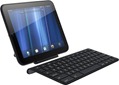
ae-300-hp-touchpad-keyboard-300wThe “instant on” capability of the TouchPad, and immediate access to most of my instant messaging and e-mail accounts, made it ideal for my trip to WorldCon 2011. Having the convention program on the TouchPad was totally awesome. During lunch and other breaks, I would bring out my keyboard to make blog posts and complete my notes, as well as answer the occasional e-mail or three. (Not always easy, as the WiFi connectivity there was spotty at best outside the main area.) I even watched the streaming broadcast of the Hugo awards on it from my hotel room.

Would I recommend the HP TouchPad? Definitely. At it’s original retail price, that might have been debatable, but at the current $149 price (I have the 32GB model), there is no doubt. It does almost everything I need in a much more portable package than my netbook (something I never would have thought). I’m looking forward to seeing how it behaves during this year’s NaNoWriMo.

WorldCon 2011 Report: Day Four – Can Computers Think?

Saturday, August 20, 2011 0 comments
Can Computers ThinkThere was much discussion about Watson and what it (he?) represented in terms of advancement in terms of computer-based artificial intelligence. (I don't think anyone considers Watson a true AI.)

The concept of what most people consider a true AI is based on HAL from "2001: A Space Odyssey". We aren't there yet.

What we keep discovering is that when we program systems, they don't respond like humans. The example was given of the Google car that does not see or drive that a human being does.

If a computer evolved to the point where it could rule us, would it want to?

If a computer was developed that could develop improved programs for itself (or other computers), it might evolve so quickly that we might not realize or recognize it until too late.

Advances in hardware (processing power) has been the chief--not sole driver--in recent advances in computer "artificial intelligence", but the questions (and limitations) seem to have remained fundamentally unchanged in nearly 40 years.

WorldCon 2011 Report: Day Four – SF Physics Myths

SF Physics Myths(Gregory Bedford [the moderator] is always entertaining.)

Favorite quote: "Stars are facts; constellations are theories."

Exceeding the speed of light is *not* the same as breaking the speed of sound. The latter relies simply applying more energy to the problem. The former is limited by the fundamental structure of the universe.

You cannot go from concept to implementation quickly. Science and invention take time. Things almost never work the first time.

Why aren't spaceships spherical?
A very practical reason: It's much more difficult to stack equipment and people in a spherical shape. (There is a common belief that the shape in space doesn't matter, but that point was not addressed.)

Theories are created to fit the facts as observed. This can often be influenced by the observer's experiences and frame of mind. Many stories are based on the extrapolation of theories as if they were proven to work. (There seemed to be some dissatisfaction with this. Personally, I'm okay with this. Isn't that kind of the definition of "speculative fiction"?)

WorldCon 2011 Report: Day Two – The Ethics of AI

Thursday, August 18, 2011 0 comments

The Ethics of AIArtificial intelligence likely to be different from human or other biological intelligence we know. Will we recognize it when we see it? Will we recognize it soon enough?

The majority of the arguments focused on "sentience" and "self-awareness". How do we measure sentience, particularly in a non-biological system? The Turing Test? Is that enough? Or is it possibly biased to recognize human-like intelligences?

How do we measure self-awareness? Is the "mirror test" truly reflective (sorry!) of self-awareness or just demonstrative of understanding of how a mirror works?

For machine-based systems, the "person" is in the data. This leads to all sorts of good questions and parallels in terms of the function of operating systems, physical structures, and their similarities and differences in both types of life.

Humans have differing physical structures, but similar core elements: skeletons, circulatory systems, etc. and an autonomic systems to drive them (an operating system?). Computers have motherboards, processors and operating systems to drive them.

Humans have memories; computers have data. The argument was made human personalities are based on their knowledge and memories (data + subjective analysis). Can computers be subjective?

Can compassion be programmed into a computer? At what point does it become more than data and programming? How do we quantify human compassion?

An interesting point was made that we legally grant rights to humans at the age of 18 (this assumes a certain level of maturity--that got a laugh). How would we measure the "maturity level" of an AI? Children and developmentally disabled individuals are not granted certain rights in order to protect them. Their caregivers are assigned responsibility. How might this apply to an AI?

What happens should an AI misbehave or contradict--in other words, behave like a child? What happens if an AI commits a crime--intentionally or unintentionally? What would be an appropriate punishment?

A very interesting statement was made during this panel: The Three Laws of Robotics (from Isaac Asimov) are a form of slavery. Think about it.

(Note: Some of the questions and extrapolations included are mine as they occurred to me during the session.)

The Death Spiral of the Publishing Death Spiral

Monday, August 09, 2010 0 comments
I've been following this discussion for the past week or so: The Publishing Death Spiral.

I'll leave it to you to make your own judgment on the opinions espoused within, but I do find Part Three pretty much dead on. My questions are:
  • How long will it take before the inevitable evolution wins out?
  • And what happens to authors in the meantime until it does?
(I know there's a lot more questions to be asked, but I thought I'd start with just two...)

Say Hello to My Little Friend . . .

Tuesday, August 25, 2009 0 comments
Okay, I admit it, sometimes I get it completely wrong.

When netbooks (those small, ultra-light portable computers) first arrived on the scene, I thought they were an interesting little niche product. Sure, they were compact, lightweight, and even occasionally stylish. There were also, in my opinion, woefully underpowered. Why would someone in their right mind spend that kind of money when, for a little more money, they could get a full-featured notebook computer?

Several months ago, I tried one out of curiosity. I spent probably a grand total of less than 30 minutes with it before concluding that, although it seemed fast enough, the screen was too small, the smaller-than-usual keyboard made typing on it maddeningly annoying. That, for me, seemed to be the end of it.

I completely missed the point. It wasn't about power; it was about portability. For many people, the main uses of their computer are for checking e-mail and browsing the web. Neither of these activities require a lot of computing firepower. Provide these in a computer that is not only relatively inexpensive, but also portable and, apparently, you have a winner.

Through a somewhat complex series of events, I ended up owning one of these netbook computers. Although I don't use it as primary system, I also can't imagine not having it. Its portability makes it ideal for when I need a computer along to check e-mail and perform various activities on the web. It is perfect for when I want to wonder around the house, but be available via e-mail or instant messages.

I've also discovered that it is capable of running Microsoft Office 2003 capably. (It's no speed demon in that regard, but it more than adequately handles basic word processing without me having to worry about formatting hiccups transferring files between Works and Word.)

While I'm not ready to give up my desktop system, as the price-to-performance ratio is still better there, I can now see why netbooks are all the rage. I'm even ready to believe that these systems are poised to fundamentally change the consumer personal computer market for the reasons given above.

So, yes, contrary to popular belief, I am capable of admitting when I'm wrong.